Amazon prices move fast. See why real-time MAP monitoring helps brands catch violations daily checks can miss.

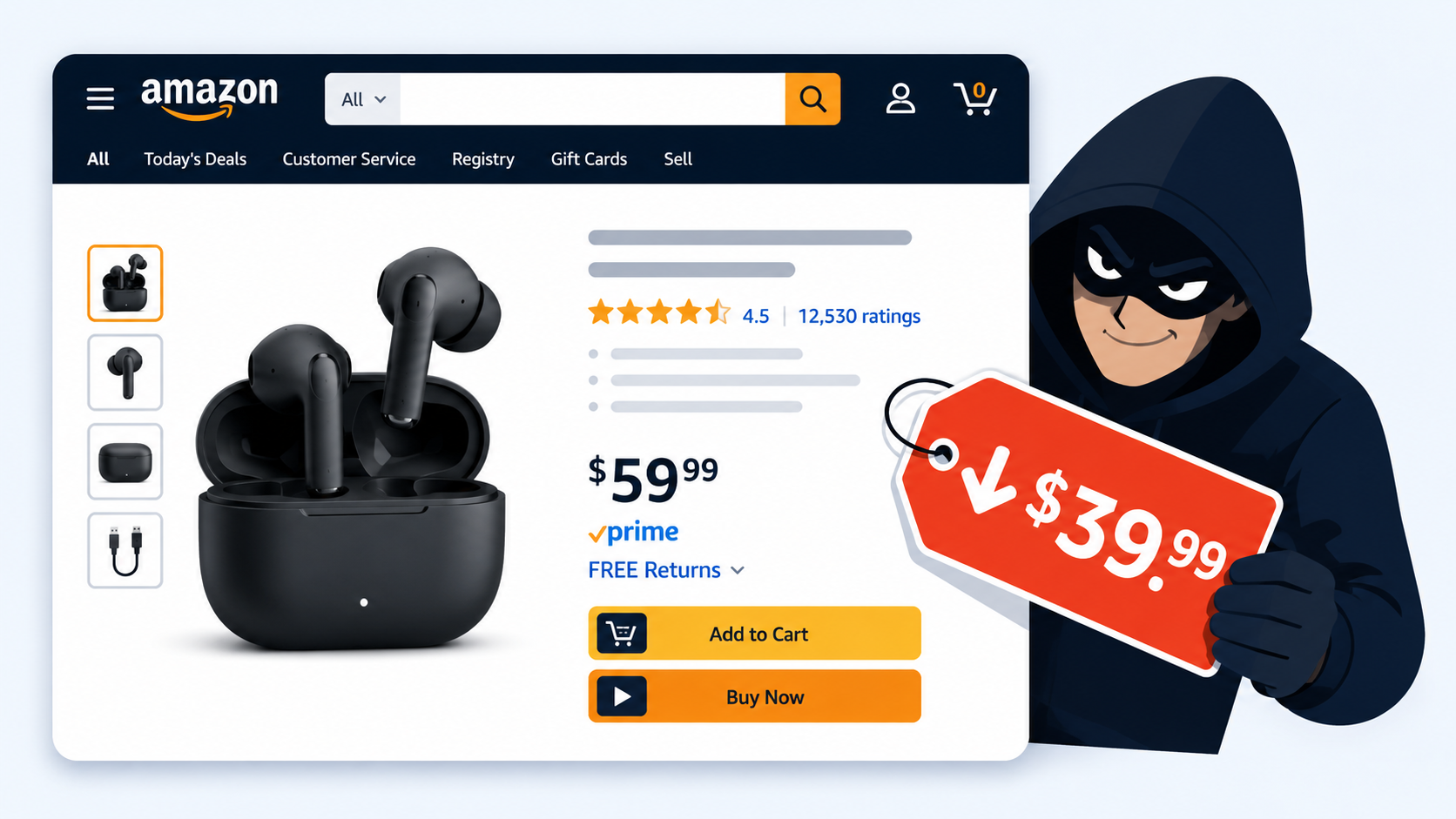
For many brands, MAP monitoring starts with a simple question: is anyone selling below MAP?
That matters, but on Amazon, it is not enough.
Amazon pricing can change throughout the day. Sellers use repricers. One seller drops below MAP, another follows, and the price can move back before a once-a-day monitoring check ever sees it.
That means a brand may look at a clean daily report and assume its MAP policy is being followed, while violations are actually happening between checks.
This is the gap real-time Amazon MAP monitoring is built to close.
MapAuthority monitors Amazon violations in real time, logging each MAP violation with a timestamp down to the minute. Instead of seeing only the price that happened to be live during a scheduled scan, brands can see the pricing activity that actually occurred.
A seller does not need to stay below MAP all day to create a problem.
Some sellers may drop their price during evenings, weekends, or lower-visibility hours. Others may use automated repricing that pushes their offer below MAP briefly, then moves it back when market conditions change.
A scheduled check can miss all of that.
And even short-lived violations matter. A seller dropping below MAP can trigger other sellers to follow, create conflict with compliant retailers, and weaken the brand’s ability to maintain consistent advertised pricing.
The problem is not only whether a violation exists right now.
The problem is whether violations are happening repeatedly, which sellers are causing them, and how often they are getting away with it.
When a MAP violation occurs on Amazon, MapAuthority logs it in real time and timestamps it to the second.
That gives brands a much clearer record of seller behavior. Instead of relying on isolated snapshots, users can review violations by:
This matters because one isolated violation does not always tell the full story.
A seller who accidentally drops below MAP once may require a different response than a seller who repeatedly violates MAP on multiple products or consistently drops prices during off-hours.
MapAuthority also keeps sellers in the app even after they disappear from a listing. So if a seller violates MAP, drops off the product page, and returns later, the brand still has that historical record.
That is where monitoring becomes more useful than a simple alert. It gives the brand a record of behavior, not just a list of current low prices.
Monitoring is valuable because it creates visibility. But visibility is only useful if the brand can respond.
MapAuthority allows brands to send automated enforcement emails to sellers who violate MAP, with messaging that can be customized to match the brand’s process and policy.
For some brands, that may be enough. They need clear monitoring, reliable violation history, and an easier way to contact sellers without managing every step manually.
Other brands may eventually need more control, especially when repeat violations continue on Amazon.
That is where MapAuthority’s enhanced enforcement comes in. In addition to monitoring and automated enforcement emails, brands can move into stronger Amazon enforcement capabilities designed to block certain price drops below MAP before they go live.
The important point is that brands do not have to choose between strong monitoring and stronger enforcement on day one. They can begin with detailed Amazon visibility, understand the actual problem, and decide whether enhanced enforcement makes sense based on what the data shows.
Amazon is where real-time monitoring has the clearest value because pricing moves so quickly.
MapAuthority also monitors retailer websites and marketplaces across the wider web. Those channels are generally monitored on a scheduled basis, with once-per-day checks being the most common setup because it balances coverage and cost. Monitoring can be increased up to hourly when a brand needs more frequent visibility, but generally, other marketplaces and retail sites are not adjusting pricing multiple times per day like you’ll see on Amazon.
That gives brands broad online coverage while using real-time monitoring where it matters most: Amazon.
A MAP monitoring platform should do more than tell you that a seller is below MAP at the moment a scan runs.
Before choosing a platform, ask:
Those questions get closer to what brands actually need.
Because on Amazon, a daily snapshot can look clean while the real pricing activity tells a completely different story.
MapAuthority gives brands real-time Amazon MAP monitoring, timestamped violation history, seller-level reporting, customizable automated enforcement emails, and a path to enhanced enforcement when more control is needed.
If your current monitoring only checks Amazon once or twice per day, you may be seeing only part of the problem.
Book a demo to see how MapAuthority captures Amazon MAP violations in real time.
Get new blog posts sent right to your inbox and stay up to date on everything MAP.


.jpg)